
Most laundromat business cases fall over in the same place. The equipment number is roughly right and everything around it is optimistic. Machines are usually only 40 to 55 percent of what it costs to open a new store. The rest is fit-out, building services, signage, payment infrastructure and the working capital you need before the site starts paying for itself.
This guide builds the numbers the way a lender or an experienced operator would: cost stack first, then revenue model, then the specification decisions that quietly decide whether the site earns for seven years or limps.
Where the money actually goes
A small unattended store with six to eight washers and matching dryers generally lands in the low to mid hundreds of thousands once everything is counted. A larger store with higher capacity machines, a wash and fold counter and a staffed roster climbs from there. The proportions below are typical of new Australian fit-outs we quote and are a safer starting point than any single dollar figure.
Typical cost breakdown of a new laundromat fit-out
Indicative proportions for a new Australian store. Actual figures vary with tenancy condition and existing building services.
Washers and dryers: 48% | Building services (gas, power, plumbing): 17% | Fit-out and tiling: 14% | Payment system and software: 8% | Signage, security, furniture: 7% | Working capital and contingency: 6%
Building services are the line item that surprises people most, because the cost has almost nothing to do with your machine choice and everything to do with the tenancy. Bringing adequate gas and three-phase power into a shell can be a five-figure exercise on its own, and it is not negotiable once you have signed. A low rent on a tenancy that cannot support your dryers is not a low rent.
Modelling revenue honestly
The only revenue model worth building is cycles per machine per day. Established Australian sites commonly run three to six washer cycles per day per machine, with dryers turning more often because many customers dry more than one load. New stores rarely start there. A realistic ramp is roughly a third of mature volume in the first quarter, climbing over twelve to eighteen months as the local catchment learns the store exists.
Typical revenue ramp for a new laundromat
Indicative monthly turnover as a percentage of the site's mature run rate. Marketing, visibility and competition move this curve significantly.
Month 1: 28% | Month 3: 45% | Month 6: 63% | Month 9: 78% | Month 12: 89% | Month 18: 100%
That curve is why working capital belongs in the budget. A store that is profitable at month eighteen can still run out of cash at month four if the model assumed mature volumes from opening week.
Running costs per cycle
Once open, the economics come down to what each cycle costs you and what you can charge for it. Utilities dominate, and drying is the larger share because evaporating water takes far more energy than washing it in. This is the single strongest argument for specifying extraction properly.
Where the cost of a wash and dry cycle goes
Indicative cost split per customer visit. Gas and electricity pricing varies by state and by contract.
Wash cycle: Gas and electricity 18%, Water and sewer 22%, Rent and outgoings 34%, Service, chemicals, payment fees 26% | Dry cycle: Gas and electricity 46%, Water and sewer 0%, Rent and outgoings 34%, Service, chemicals, payment fees 20%
Specification decisions that change the return
Machine choice is a financial decision dressed up as a shopping decision. High-G extraction removes more water from the load before it reaches the dryer, which shortens dry time, cuts gas consumption and increases how many customers a single dryer can serve in a trading day. Over a seven-year hold, that difference is usually larger than the difference in purchase price.
| Decision | Cheaper option | Better option | Why it usually pays |
|---|---|---|---|
| Extraction | Standard G-force washer | High-G soft-mount washer | Shorter dry times, lower gas use, more cycles per dryer per day |
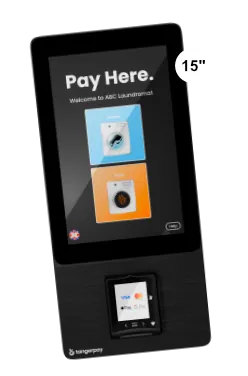
| Payment | Coin only | Cashless with coin fallback | Higher average spend, remote pricing, no cash handling or theft risk |
| Machine mix | All one size | Mixed 8kg to 25kg | Large-load customers pay a premium and free up small machines |
| Monitoring | None | Connected platform | Faults flagged before customers find them, idle machines identified |
Buying an existing store
Buying rather than building changes the risk profile, not the arithmetic. Ask for twelve months of machine-level data instead of a summary profit and loss. Cashless platforms make that trivial to produce, so a vendor who cannot produce it is telling you something useful.
- Cycle counts for every machine, not just the age of the fleet.
- Twelve months of utility bills to verify the running cost claims.
- Lease term, remaining option periods and rent review mechanism.
- Service history and who has been maintaining the equipment.
- Local competition and any planned openings within the catchment.
A store sold on a good multiple with a fleet at the end of its cycle life is really a fit-out purchase with a full equipment replacement attached. Price it that way and the negotiation becomes straightforward.