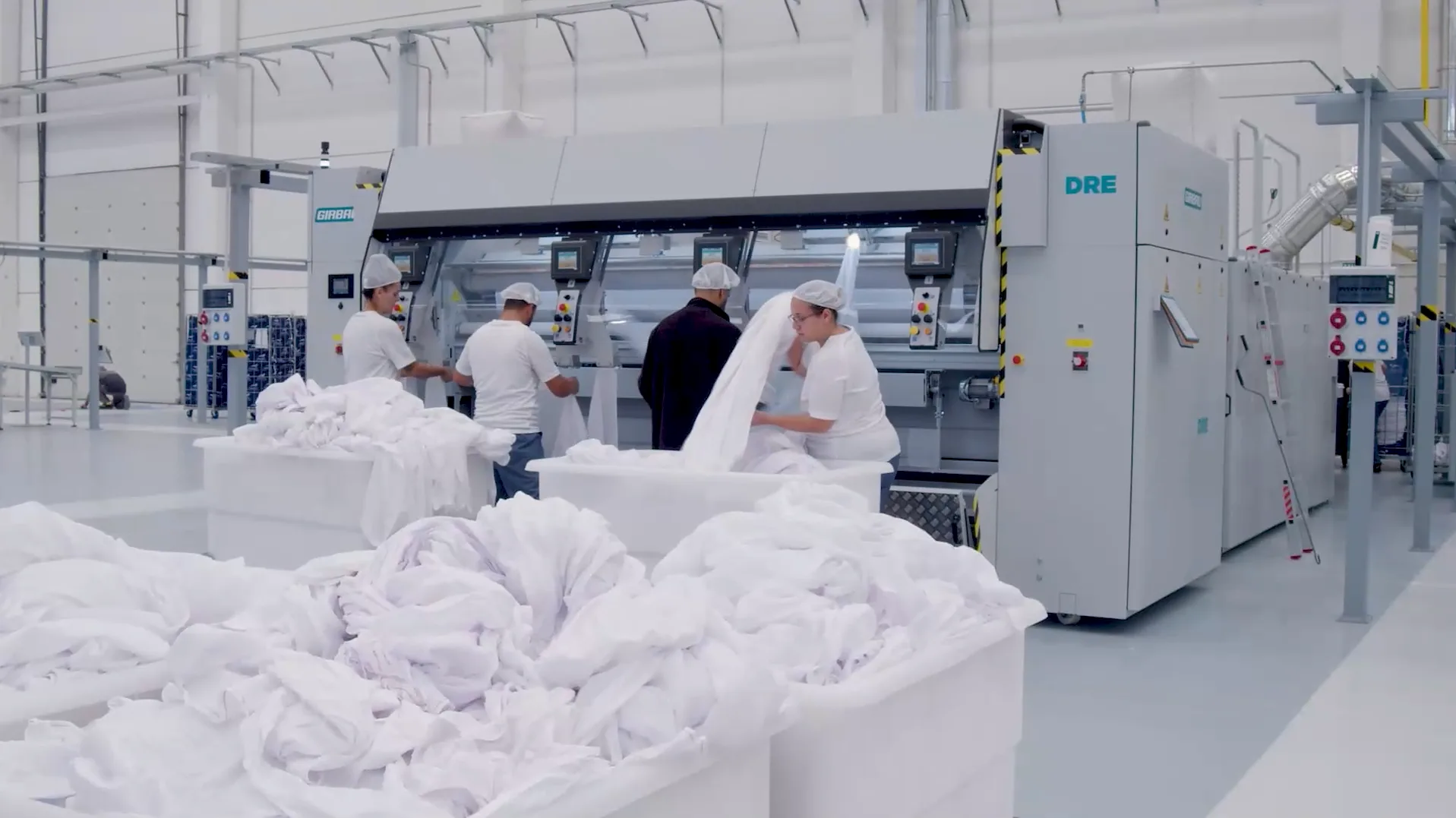
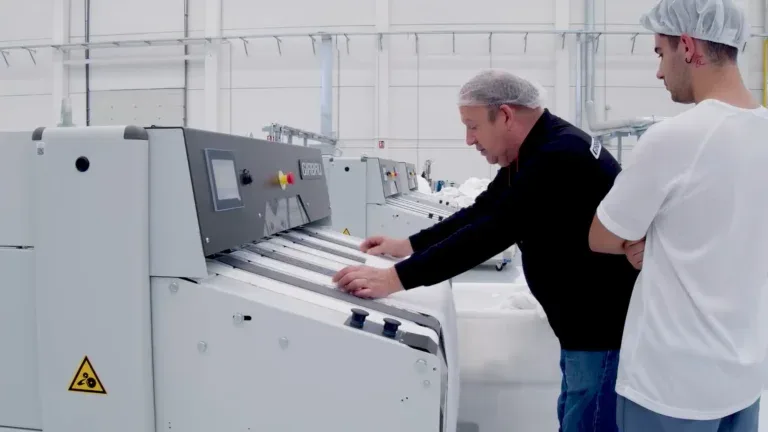
Throughput per operator
Automation moves more linen with fewer manual handling steps.
Central Laundry
Industrial plant designed as one linen flow, and supported like your business depends on it, because it does.
Central Laundry
Central and commercial laundries process linen for other people's businesses, which means quality, turnaround and cost per kilogram are all contractual, not aspirational.
Aqualogic supplies and services the industrial end of the market: tunnel washing systems, barrier and open-pocket washer extractors, high-capacity drying, multi-roll ironer lines, feeders, folders and stackers, from brands built for 24-hour operation.
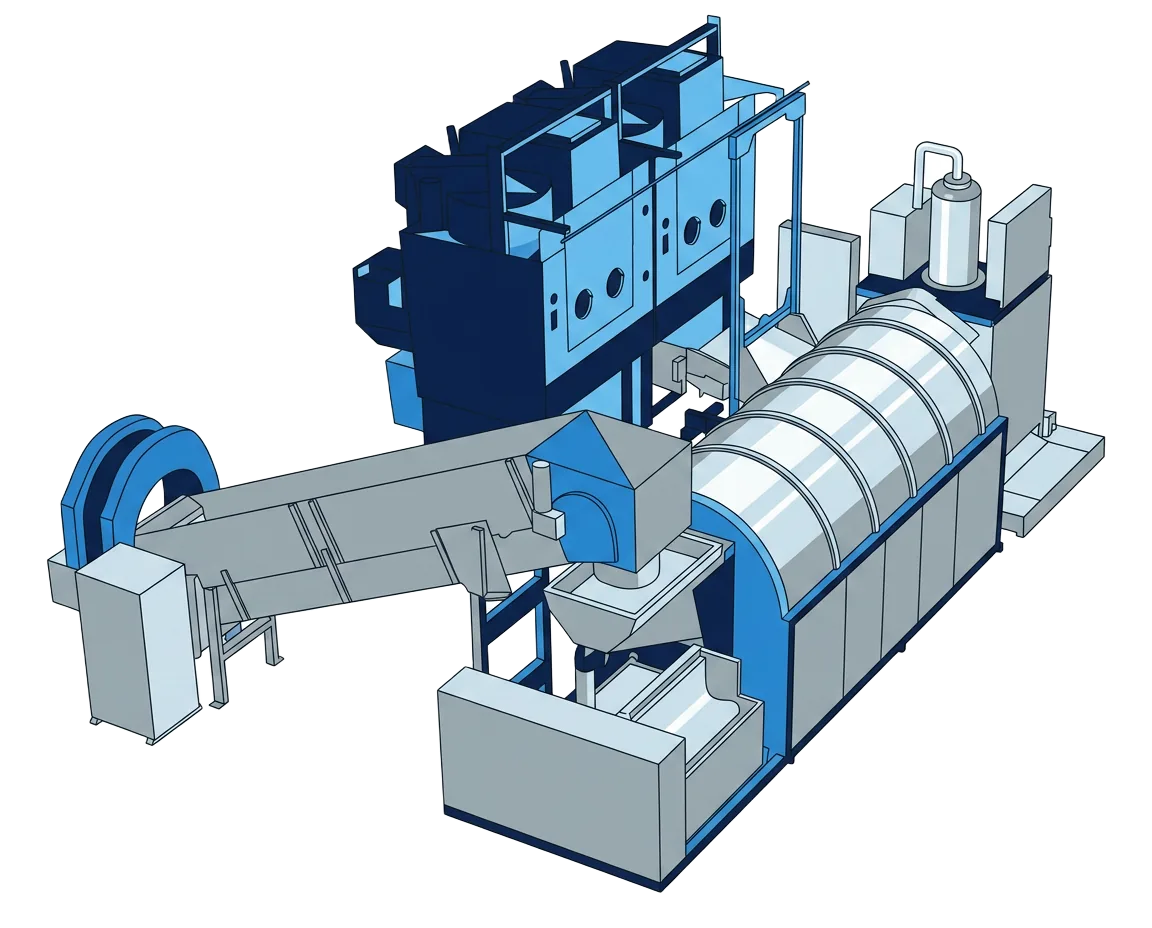
We design the plant as a single flow from soiled sort to dispatch, because a fast washroom feeding a slow finishing line is just an expensive bottleneck.
330kg
Largest washer extractor capacity supplied
50+ yrs
Building industrial laundries in Australia
Every state
Factory-trained service technicians
Automation moves more linen with fewer manual handling steps.
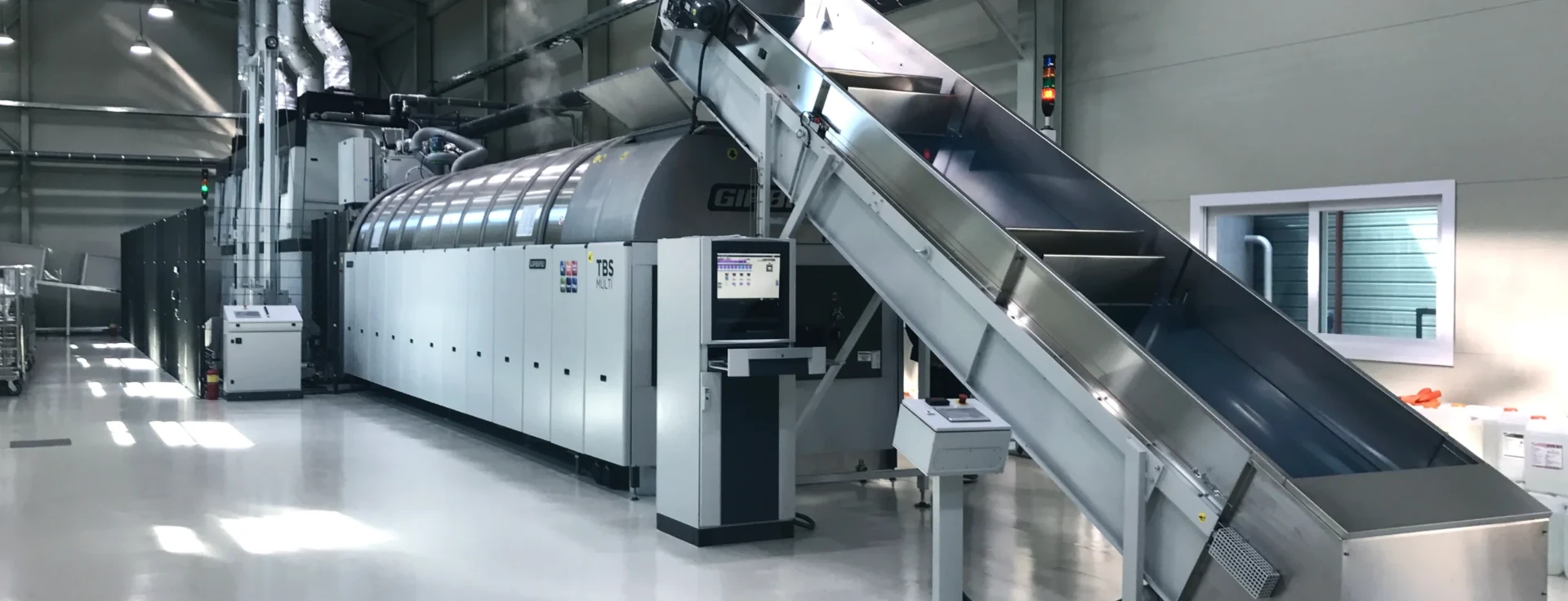
Tunnel systems process consistent high volumes with less waste per kilogram.
Recover heat and water to reduce the operating cost of every load.
Separate clean and soiled flows with verifiable cycle records.
Redundancy, parts and nationwide technicians keep production moving.
The linen flow
Every stage is sized against the one after it, so linen never queues and no operator waits on a machine.
01
Classification, weighing and bagging or rail systems that feed the wash floor in consistent batch weights.
02
Tunnel washers for volume classifications, barrier and open-pocket washer extractors for specialist and overflow work.
03
Presses or centrifugal extraction, then shuttle or conveyor transfer to dryers, removing manual load handling.
04
High-capacity dryers with moisture control that condition flatwork for ironing rather than over-drying it.
05
Feeders, multi-roll ironers, cross-folders, stackers and towel folders running as one synchronised line.
06
Sorting, packing and cage loading against the delivery run, with production data captured per classification.
Connected controls turn a central laundry from an operation you supervise into one you measure, cost per kilogram, utilisation per machine and disinfection evidence per cycle.
The Girbau Sapphire platform and equivalent industrial control systems report it all to one cloud dashboard, on site or across multiple plants.
Key Features Include
When a contract renewal lands, you negotiate from measured cost per kilogram rather than an estimate.
Industrial brands

Continuous batch tunnels, high-capacity washer extractors, dryers and PB ironer lines.
Heavy industrial washer extractors, tunnels and press systems for the highest volumes.
Feeders, ironers, folders and stackers, the finishing end of the world's biggest laundries.
Washer
Industrial & tunnels
Tunnel systems, barrier washers and 9 to 330kg washer extractors.
Dryer
High-capacity dryers
Large-pocket dryers with moisture control and heat recovery for continuous duty.
Finishing
Ironer lines
Multi-roll ironers, feeders, folders and stackers from Girbau and Chicago Dryer.
Service
National support
Preventative maintenance, breakdown response and the largest parts holding in Australia.
Common questions